

Need More Wine & Gold: Cavs vs. Pistons Reaction (COLUMN)
The Cavs are good. The habits aren’t.

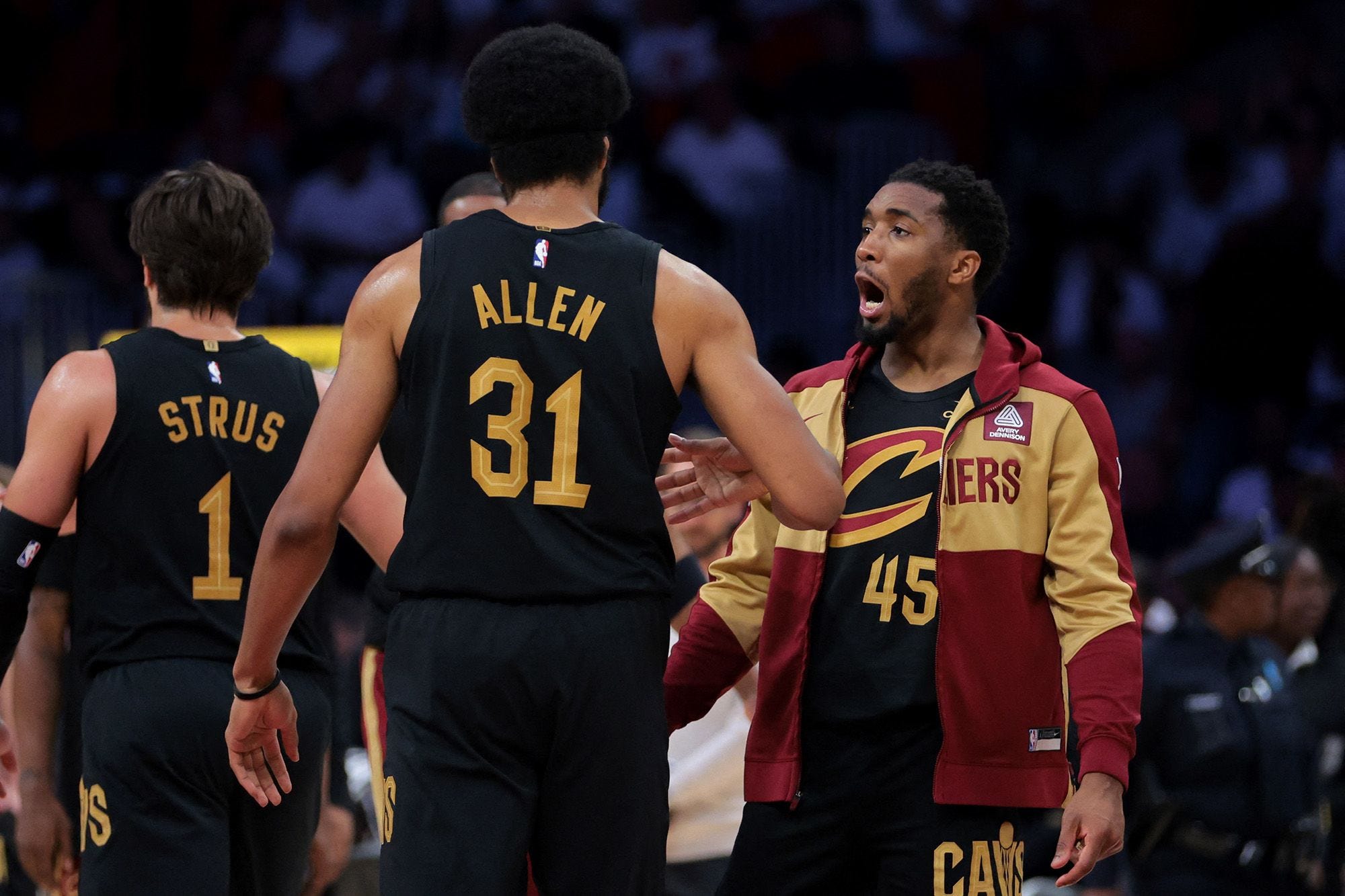
CLEVELAND— Midseason check-ins are usually where you either (1) start dreaming about June or (2) start Googling “best draft prospects” at 2 a.m. The 2025-26 Cavaliers are stuck in the middle—talented enough to scare good teams, messy enough to lose games on a single possession they didn’t finish.
Sunday’s 114-110 loss to Detroit was basically the Cavs’ season in one night. A strong start, a second-quarter disaster, a legit late push, and then one rebound that didn’t get secured—again.
And the weirdest part? The most telling stat of the year might be the one that has nothing to do with Donovan Mitchell’s shot-making or Evan Mobley’s blocks.
It might be Lonzo Ball.
At the halfway-ish point, Cleveland is 20-17 and sitting in the East’s second tier, chasing a Detroit team that’s sprinting away with the conference (26-9). That record is fine. The way they’re getting there is the problem.
Because when Lonzo plays, the Cavs look like a team trying to find itself.
When he doesn’t, they look like a team that already knows.
With Lonzo Ball:
13-14
-1.0 net rating (115.7 ORTG, 116.7 DRTG)
118.0 PPG, 27.5 APGWithout Lonzo Ball:
7-3
+11.6 net rating (122.2 ORTG, 110.6 DRTG)
122.4 PPG, 28.3 APG
That’s not a small swing. That’s a whole different team.
Now, I’m not here to do the “Lonzo is the problem” thing with a victory cigar in my mouth. The sample sizes are uneven, opponent quality matters, and injuries have made this season feel like one long “questionable” tag. Still—the split is loud enough to stop pretending it’s nothing.
It points to the bigger reality: the Cavs don’t have a clean identity right now, and the rotation hasn’t settled. When the lineups are simplified (often because someone is out), the offense is cleaner, the pace is quicker, and the decision-making looks less like a group project.
That showed up against Detroit, even in a loss.
Cleveland opened Sunday with real defensive bite—holding Detroit to 19 points in the first quarter, blocking shots, and looking like the tougher team for about 12 minutes.
Then the second quarter happened. And the second quarter has basically been Cleveland’s arch-nemesis this year.
Detroit dropped 47 in the quarter. Daniss Jenkins—a two-way guy who probably didn’t have “21-point quarter on the Cavs” on his New Year’s bingo card—went nuclear, hitting six threes in that stretch. Cleveland lost track of him, recovered late, and paid for it every time.
That’s the Cavs in a nutshell: one mistake becomes two, then three, then suddenly you’re playing uphill for the rest of the night.
They still had their chances. Mitchell dragged them back with a 9-0 burst late. Sam Merrill hit a lightning-bolt three that cut it to two with barely any time coming off the clock. Cleveland even had the ball down two late.
And then:
Mitchell got stripped.
Detroit got a tip-in off an offensive rebound.
Mitchell missed a free throw while trying to claw back.
Ball game.
It’s not that Cleveland didn’t compete. It’s that the Cavs keep losing the same kinds of moments: loose-ball rebounds, live-ball turnovers, one possession where you have to finish the play.
Mobley is the reset button—and the Cavs need it.
The most encouraging midseason trend is on defense, and it starts with Mobley looking like a one-man glitch in the paint.
His recent block totals are ridiculous (15 blocks across four games, including four Sunday). When he’s healthy, Cleveland’s defense has a backbone. You can see it in how drivers hesitate and how wings think twice before floating something up near the rim.
The Cavs have climbed back toward the top-10 range defensively over the last couple weeks, and that’s not a coincidence. This is what a Defensive Player of the Year does: he changes what both teams are allowed to do.
But there’s a catch. Defense can’t save you if your offense goes into mud for an entire quarter. The second quarter is killing them.
Cleveland’s second quarter issues aren’t a “bad luck” thing anymore. It’s structural. And Atkinson pretty much said it without saying it: the bench groups haven’t worked.
That’s where the Lonzo conversation comes back. He was brought in to stabilize those minutes—organize the offense, push tempo, make the second unit feel like a unit instead of five guys taking turns playing 2 bounce.
It hasn’t consistently happened. Sometimes it’s injury timing. Sometimes it’s lineup fit. Sometimes it’s just shots not falling. But the common theme is the Cavs’ bench minutes feel fragile. If the first punch doesn’t land, the whole sequence falls apart.
And on a night where Jarrett Allen and Dean Wade were out (two of your better rebounders and “glue” pieces—though I’m still yet to believe Allen will stay past Feb. 6), the margin for error was basically zero. Cleveland didn’t have the depth to absorb that, especially against a Detroit team that knows exactly what it wants to be.
Detroit knows who it is. Cleveland is still deciding. After the game, Mitchell talked about Detroit having an identity — physical, relentless, consistent. And he wasn’t wrong.
Detroit is the team that wins the “adult” parts of basketball: rebounding, strength, paint touches, second efforts. You don’t beat them by being cute.
Cleveland, meanwhile, still swings between styles:
Some nights they want to be a defensive-first transition team.
Some nights it turns into a three-point math experiment.
Some nights it’s just Mitchell bailing water with a bucket.
The Pistons didn’t play perfect Sunday, but they played like themselves. The Cavs played like themselves for one quarter… then spent the rest of the game trying to get back to it.
So what does the midseason verdict look like?
The Cavs are not cooked. They’re also not a finished product. They’re 20-17 in a conference where Detroit is running away with the 1-seed pace, New York and Boston are right behind, and everybody else is fighting for position.
That means the Cavs still have time—but the “we’re still figuring it out” line has an expiration date.
Here’s what has to tighten up in the second half:
Win the second quarter (or at least survive it). Keep a star on the floor. Stop bleeding.
Take care of the ball. Live-ball turnovers turn into instant runs.
Rebound like it matters. Because it does. One tip-in decided Sunday.
Decide what Lonzo’s role is. If the numbers say the offense hums more without him, Cleveland needs to either adjust how he’s used or stop forcing the fit.
Keep building the defense around Mobley. That’s the one part that looks “real” every night.
The Cavs don’t need to become the Pistons. But they do need to stop being surprised by what kind of game they’re in. Right now, Cleveland has the talent to hang with anyone—and the habits to trip over itself against anyone.
By Aiden Brueck, The Letter Media Network
Contact: brueckaiden@gmail.com