

2026 MAC Men’s Basketball Tournament Preview: Breaking Down the Field in Cleveland
A historic undefeated season, the defending champions, and a crowded group of contenders set the stage for three days of chaos at Rocket Arena in Cleveland.

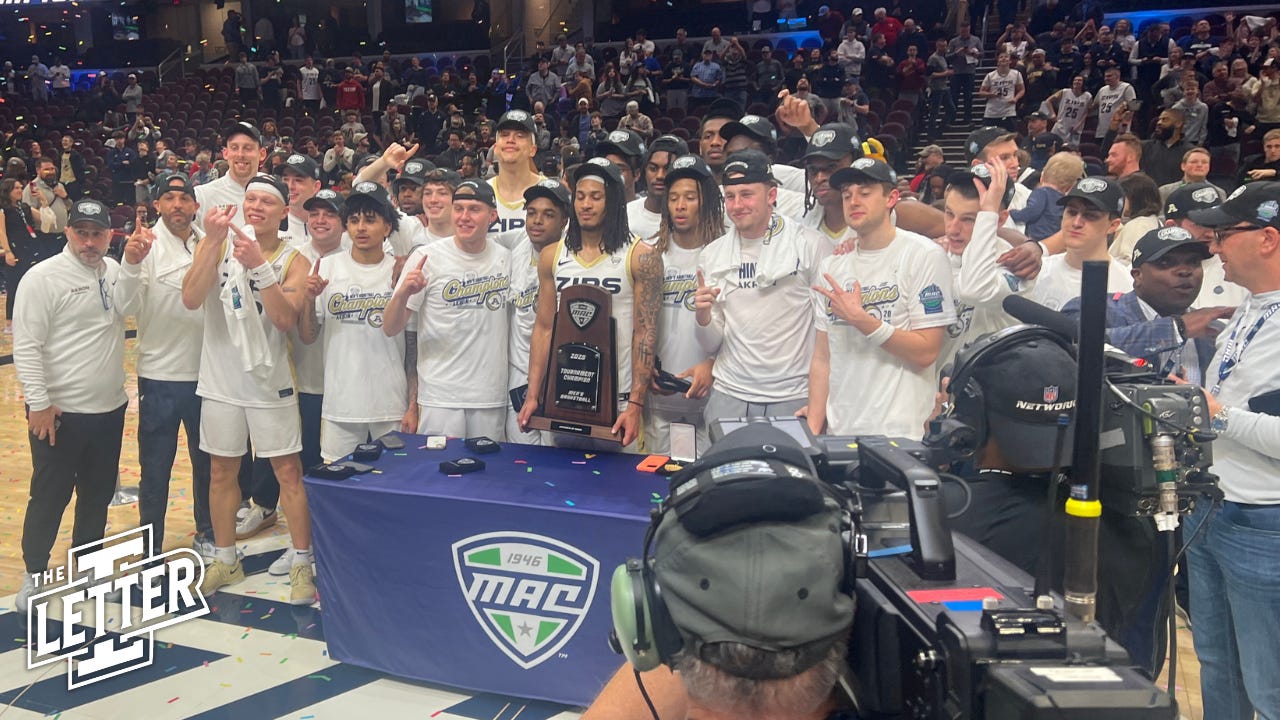
CLEVELAND — The Mid-American Conference men’s basketball tournament returns to Rocket Arena this week, and the storylines are pretty clear.
Miami had the historic season. Akron still feels like the program to beat. Kent State has star power. Toledo is trying to end a drought that’s older than most players in the league. Bowling Green plays defense like it’s personal. Ohio is weird. Buffalo can shoot. UMass is the wild card.
Eight teams. Three days. One automatic bid to the NCAA Tournament.
Here is a closer look at the field heading into Cleveland.
No. 1 Miami RedHawks (31-0, 18-0)
Miami’s regular season was historic. The RedHawks went undefeated, finished 18-0 in MAC play and have not lost since last year’s conference championship game against Akron.
The offense is the headline. Miami averaged 90.9 points per game and ranks among the most efficient offenses in the country. The RedHawks shoot over 52 percent from the field and nearly 40 percent from 3-point range.
What makes the offense so difficult to defend is the balance. Miami regularly plays multiple scorers and has had seven players average double figures this season. Guards Peter Suder, Brant Byers, Eian Elmer and Luke Skaljac lead a deep perimeter group that can score from anywhere.
Coach Travis Steele has been able to rotate lineups all season without losing production.
The only lingering question is defense. Miami can score with anyone, but if the shots ever stop falling, the RedHawks will need to prove they can grind out a win on the other end.
Still, they enter Cleveland as the No. 1 seed for a reason.
No. 2 Akron Zips (26-5, 17-1)
If Miami had the best season, Akron remains the program everyone is chasing.
The Zips have won three of the last four MAC Tournament titles and enter the postseason on a 16-game conference winning streak. Akron finished the regular season with seven straight victories, many of them convincing.
Point guard Tavari Johnson has been the centerpiece of the offense, averaging more than 20 points per game while ranking among the MAC leaders in assists. Johnson controls the pace and is one of the most dangerous guards in the league.
Akron also gets major production from Amani Lyles, Shammah Scott and Evan Mahaffey, giving the Zips scoring at multiple positions.
The biggest difference between Akron and most teams in the field is defense. The Zips lead the MAC in field-goal defense and force turnovers at one of the highest rates in the conference.
That defensive edge is a big reason Akron still enters the tournament as a favorite despite Miami’s perfect record.
No. 3 Kent State Golden Flashes (23-8, 14-4)
Kent State once again put together a strong season under coach Rob Senderoff. The Golden Flashes’ only MAC losses came against Miami, Akron twice and Central Michigan.
Kent’s success starts with forward Delrecco Gillespie, who averages 18.1 points and 11.2 rebounds per game. Gillespie leads the nation in double-doubles and has been one of the most dominant rebounders in college basketball.
Point guard Cian Medley runs the offense and leads the MAC in assists, giving Kent one of the best inside-outside combinations in the conference.
The challenge for the Golden Flashes has been defense. Kent allows more points than any MAC tournament team and has struggled with foul trouble throughout the season.
If the defense holds up, Kent State has enough talent to compete with anyone in the bracket.
No. 4 Toledo Rockets (17-14, 11-7)
Toledo continues to chase a long-awaited MAC Tournament championship. The Rockets won the first conference tournament in 1980 but have not claimed the title since.
This year’s team is built around its backcourt. Sonny Wilson and Leroy Blyden Jr. are both among the top scorers in the MAC and carry much of Toledo’s offensive production.
Wilson also plays heavy minutes and ranks among the national leaders in field goals made.
Inside, Sean Craig and Austin Parks provide balance for the Rockets and help keep the offense from becoming too perimeter-focused.
Defensively, Toledo has been solid and disciplined. The Rockets rank among the national leaders in fewest fouls committed, which limits opponents’ opportunities at the free-throw line.
Toledo has the talent to compete with anyone in the bracket, but the challenge has been finishing tournament runs against the league’s top teams.
No. 5 Bowling Green Falcons (18-13, 9-9)
Bowling Green quietly had one of the most balanced profiles in the conference.
The Falcons are one of only two MAC teams to rank in the top four in both scoring offense and scoring defense. The other is Akron.
Much of that success comes from Javontae Campbell, one of the most disruptive defenders in the country. Campbell leads the NCAA in total steals and steals per game while also averaging nearly 19 points.
Bowling Green’s defensive pressure forces turnovers and creates extra possessions, which makes the Falcons dangerous in tournament settings.
Sam Towns, Josiah Shackleford and Mayar Wol provide additional scoring support.
If Bowling Green can control tempo and create turnovers, it has the potential to upset higher seeds in Cleveland.
No. 6 Ohio Bobcats (15-16, 9-9)
Ohio’s season has been uneven. The Bobcats finished below .500 for the first time under coach Jeff Boals, struggling with defensive consistency and outside shooting.
Ohio ranks near the bottom of the conference in 3-point shooting and has also faced rebounding disadvantages due to its smaller lineup.
Despite those issues, the Bobcats have one of the MAC’s most talented guards in Jackson Paveletzke. He ranks among the conference leaders in both scoring and assists and is capable of carrying the offense.
Forward Javan Simmons will also play a key role as Ohio faces larger frontcourts throughout the bracket.
If the Bobcats can find offensive rhythm, they have the ability to challenge higher seeds.
No. 7 Buffalo Bulls (17-14, 7-11)
Buffalo improved this season after two difficult years, but depth remains a concern.
The Bulls rely heavily on their starting lineup and receive limited scoring from their bench, which ranks among the lowest in the country.
Ryan Sabol has been one of the most dangerous shooters in the MAC and ranks among the national leaders in made 3-pointers. His scoring ability gives Buffalo the chance to keep games close.
Daniel Freitag is another key contributor, though his availability has been uncertain due to injury.
Buffalo’s ability to stretch defenses with outside shooting could make them competitive, but the lack of depth presents a challenge in tournament play.
No. 8 UMass Minutemen (16-15, 7-11)
UMass enters its first MAC Tournament after an inconsistent regular season.
The Minutemen ended the season on a positive note with a win over Ohio after losing six straight games.
Leonardo Bettiol leads the team in scoring and shoots more than 60 percent from the field, while Marcus Banks adds nearly 17 points per game.
UMass is also strong on the offensive glass and leads the MAC in 3-point defense.
However, foul trouble has been a major issue. The Minutemen commit one of the highest foul rates in the country and have struggled at the free-throw line.
Those issues will need to improve quickly if UMass hopes to pull off an upset in Cleveland.
The bracket points toward one matchup everyone is watching: Miami vs. Akron.
Miami enters undefeated and owns the best offensive numbers in the conference. Akron brings the recent championship history and one of the strongest defenses in the league.
If both teams advance, the MAC championship could come down to the perfect season against the conference’s most consistent winner.
That possibility alone makes this week in Cleveland worth watching.